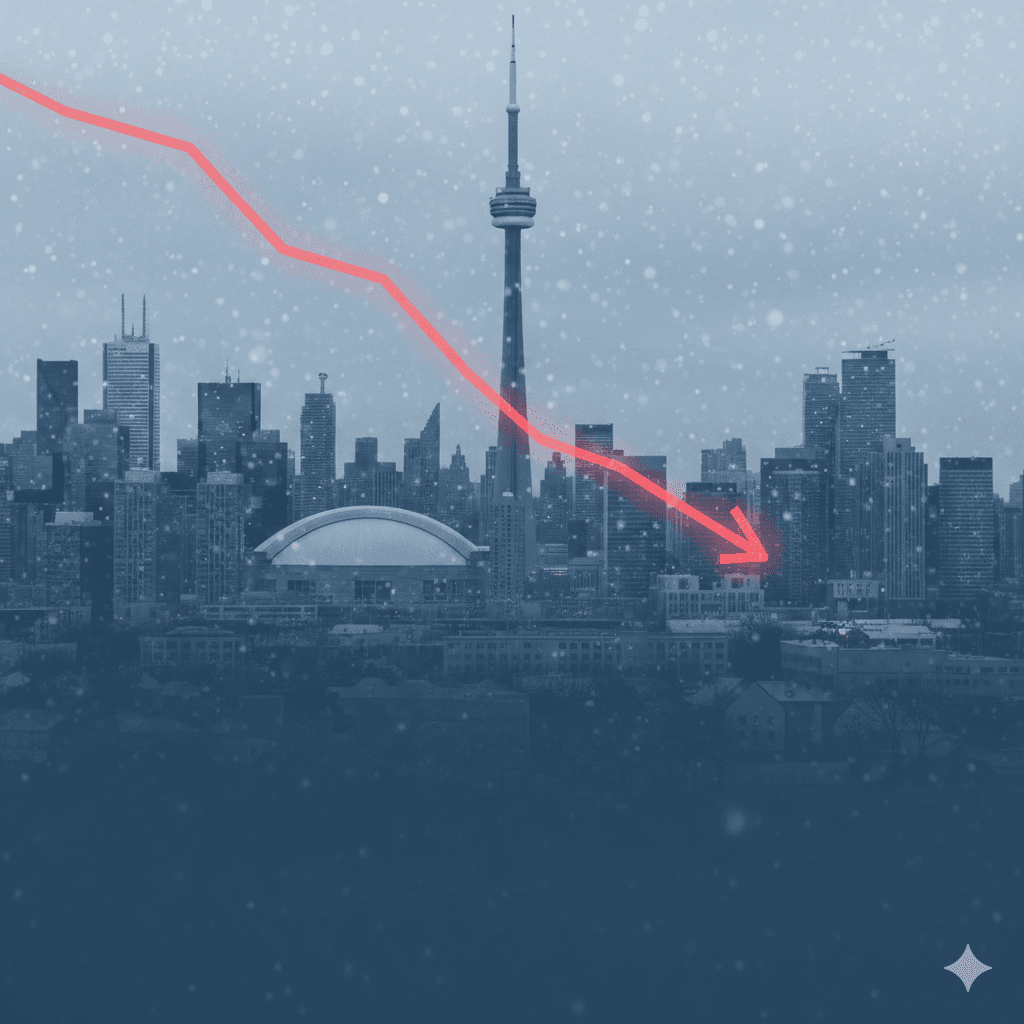

Market Snapshot
- Average detached home price in Toronto: $1.3M, down 2% YoY
- Condo prices in Mississauga average $650K, stable MoM
- Brampton's Fletcher's Meadow sees 5% price growth
- Current mortgage rate at 2.25% impacts buyer affordability
- Homes in GTA selling in an average of 35 days
In Ontario, Canada, the Greater Toronto Area (GTA) continues to present a dynamic real estate landscape. According to the Toronto Regional Real Estate Board (TRREB), the average home price in Toronto has seen a notable decline, with detached homes currently averaging $1.3 million, a 2% decrease year-over-year. Semi-detached homes average $900,000, down 1.5%, while townhouses and condos hold steady at $750,000 and $700,000 respectively. With nearly 75% of homes selling below asking in recent months, sellers are seeking strategies to expedite sales in this competitive market.
GTA Market Snapshot
Detached homes in Toronto average $1.3 million, a 2% decrease from last year. Semi-detached homes are at $900,000, down 1.5% MoM. Townhouses are steady at $750,000, while condos are at $700,000, having seen a slight 0.5% increase YoY. This data highlights the cautious optimism as the market readjusts.
Mississauga Neighbourhood Analysis
Port Credit remains a sought-after area, with home prices averaging $1.2 million, reflecting a 3% increase YoY. Erin Mills sees a stable market at $900,000, while Clarkson homes average $880,000, up 2%. Cooksville offers more affordable options, with prices around $750,000, maintaining last year's levels.
Brampton Market Opportunities
Mount Pleasant's growth continues, with homes averaging $950,000, up 4%. Bram West holds strong at $920,000, while Fletcher's Meadow shows a robust 5% growth, with homes at $800,000. Bramalea remains competitive at $770,000, offering solid investment potential.
Buyer Strategy
With the Bank of Canada setting the policy rate at 2.25%, buyers face varied affordability. For a $900,000 home, monthly payments with 20% down are approximately $3,750. At $1 million, payments rise to $4,170, while a $1.1 million property incurs around $4,590 monthly. These calculations emphasize the importance of strategic planning in current conditions.
Seller Strategy
Effective staging can yield a 5-10% return on investment, crucial for homes in the GTA market where list-to-sale price ratios hover around 97%. Homes average 35 days on market, underscoring the need for attractive listings and competitive pricing strategies.
2026 Market Forecast
RBC predicts a 3% increase in GTA home prices by 2027, while TD anticipates a moderate 2% growth. BMO and CMHC remain cautious, forecasting a 1.5% rise. These projections suggest a stabilizing market with potential for gradual appreciation.
What's the best way to sell my house quickly?
Pricing competitively and staging effectively are key. Use professional photography and leverage online marketing to reach a wider audience.
What is the 20/30/3 rule?
This rule suggests spending no more than 20% of your income on housing, saving 30% for other expenses, and having 3 months of savings for emergencies.
What month is the hardest to sell a house?
January is typically the slowest month due to weather conditions and post-holiday financial constraints.
What is the most common reason a property fails to sell?
Overpricing is the most common issue. Ensure your home is priced according to current market conditions to attract buyers.
How does the current mortgage rate affect selling?
Higher rates can reduce buyer affordability, prompting more strategic pricing and marketing approaches to attract potential buyers.
In conclusion, navigating the 2026 real estate market in Ontario, Canada, requires strategic insights and informed decision-making. For more details on mortgage strategies, visit GTA Mortgage Tactics 2026. Explore family-friendly neighbourhoods in our Spotlight Blog. For a deep dive into the market landscape, check Navigating the 2026 GTA Real Estate Landscape. Contact us at RCIB Real Estate for personalized guidance in your selling journey.